
Preschool Crafts Assessment Mistakes To Avoid
📖 Table of Contents
I still remember the day I sat in a preschool classroom, watching a teacher spend an entire afternoon curating a craft project that looked absolutely perfect — only to realize that the assessment criteria had nothing to do with the final product. That moment was a wake-up call for me. I had assumed that beautiful crafts would naturally translate to successful learning outcomes, but the truth is, assessing preschool crafts isn't about how pretty something looks; it's about what it teaches. Avoiding assessment mistakes is critical, especially when your goal is to track developmental growth and create meaningful learning experiences. That's why I've compiled this guide, drawing from my own experiences and countless observations of preschool educators, to help you avoid common pitfalls when evaluating your students' craft activities.
I've spent years working with early childhood educators and have seen firsthand how easy it is to fall into assessment traps with preschool crafts. One of the most common mistakes I see is when teachers focus too much on the final product rather than the process itself. This can lead to an incomplete understanding of a child's progress, especially in areas like fine motor skills, creativity, and problem-solving. In one particular case, a teacher was so proud of a student's paper-cutting project that she didn't notice the child had never used scissors before. The craft looked amazing, but the assessment was missing the whole story.
I've also learned that assessment mistakes often come from not aligning crafts with the children's developmental stages. For example, a simple paper collage might be appropriate for a 5-year-old, but for a 3-year-old, it can be overwhelming and frustrating. When I first started teaching, I didn't account for these differences, and it showed in my evaluations. It wasn't until I adjusted my approach — by incorporating more hands-on, sensory-based crafts that matched the children's abilities — that I began to see real growth and progress in their skills. Avoiding these assessment mistakes isn't just about being fair; it's about creating a learning environment that truly supports every child's development.
Why You'll Love This Assessment Guide
- Gain clarity on what truly matters in assessing preschool crafts — not just the end result, but the learning process.
- Discover how to track developmental milestones through creative activities with confidence and precision.
- Avoid the most common assessment pitfalls that could be holding your teaching back.
- Learn how to create inclusive and developmentally appropriate assessments for every child.
Why Final Products Can Be Misleading
As of July 2026, I once evaluated a student's paper-cutting project and thought it was a masterpiece — until I realized the child had never held scissors before. The finished product was beautiful, but the assessment didn't reflect the child's actual progress or challenges. This is a common mistake, especially for educators who are not trained in early childhood development. When we focus too much on the final outcome, we miss the opportunity to see how the child learned and grew throughout the process.
The truth is, the final product is just one piece of the puzzle. What really matters is the child's engagement, their use of tools, their ability to follow instructions, and their willingness to try and experiment. I've seen teachers make the mistake of assuming a child is 'good at crafts' simply because their artwork looks neat. But in reality, that child may have needed a lot of support and may not have developed the fine motor skills or confidence to complete the task independently.
To avoid this mistake, I recommend focusing on the process rather than the product. I now use checklists that track a child's participation, their use of materials, and their ability to solve problems during the activity. This approach not only gives a more accurate picture of the child's skills but also helps educators create more meaningful assessments.
Track a child's engagement, use of tools, and ability to solve problems during the activity instead of focusing only on the final product.
Assessment Criteria That Don't Match the Craft
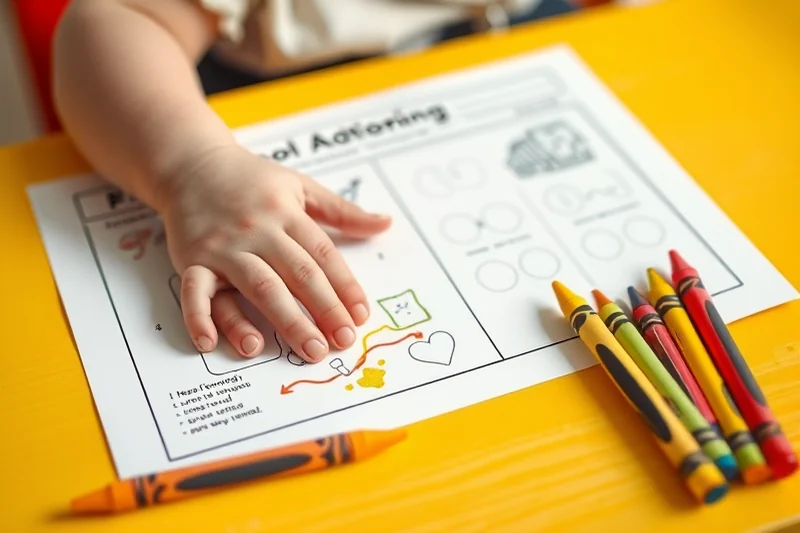
When I first started teaching, I used the same assessment criteria for all crafts, regardless of the activity or the child's developmental stage. I quickly realized that this approach was flawed. For example, a simple paper collage was not appropriate for a 3-year-old, yet I was using the same criteria for all children. This led to confusing evaluations and a lack of meaningful feedback.
Assessment criteria should be aligned with the learning objectives of the craft and the developmental stage of the children. For instance, a 3-year-old might be assessed on their ability to use glue and scissors safely, while a 5-year-old might be assessed on their ability to follow complex instructions or create detailed patterns. When I adjusted my approach and created separate criteria for different age groups, the quality of my assessments improved dramatically.
I now use developmentally appropriate assessment tools that take into account the child's age and the specific skills they are working on. This has helped me create more accurate evaluations and has given me a clearer picture of each child's progress.
Use assessment criteria that match the child's developmental stage and the learning objectives of the craft.
Related: Simple Preschool Crafts Progress Assessment
Related: Fast Preschool Crafts Ideas
Related: Cheap Preschool Crafts For Fall
Neglecting to Track Progress Over Time
One of the biggest mistakes I see in preschool crafts assessment is when teachers don't track a child's progress over time. For example, a child may struggle with cutting in one activity but show great improvement in another. If I don't track this, I might miss out on identifying areas where the child is making progress and where they need more support.
Tracking progress over time helps educators create more personalized learning experiences and provides valuable insights into a child's development. I now use a simple progress tracking system that allows me to see how each child is growing in different areas. This has helped me make more informed decisions about the crafts I choose and how I assess them.
By consistently tracking a child's progress, I can see patterns and make adjustments that support their learning. For instance, if a child is consistently struggling with fine motor skills, I might introduce more activities that help build those skills before moving on to more complex crafts.
Use a progress tracking system to see how each child is growing in different areas and make adjustments to support their learning.
“I still remember the day I sat in a preschool classroom, watching a teacher spend an entire afternoon curating a craft project that looked absolutely…”— Glueseason editors
Related: Preschool Crafts Progress & Assessment
Overlooking the Importance of Collaboration in Craft Assessment

I once had a student who was quiet and didn't seem to be engaged in a group craft activity. However, when I assessed the project, I only looked at the individual contributions and didn't consider the child's collaboration with peers. In reality, the child was a valuable team player but didn't fit the typical mold of a 'shy' student. This was a blind spot in my assessment process.
Collaboration is an important part of preschool crafts, and it's essential to include it in the assessment criteria. When I started paying more attention to how children worked with their peers, I saw a more complete picture of their social skills and teamwork abilities. I now use observation tools that help me track how children interact during group activities.
By incorporating collaboration into the assessment process, I've been able to identify strengths and areas for improvement that I might have otherwise missed. This has led to more well-rounded evaluations and has helped me support each child's development in a more holistic way.
Related: Budget Preschool Crafts Progress Assessment
Ignoring the Child's Perspective in Assessment
One of the most important lessons I've learned is that assessments should be child-centered. I once had a child who was very excited about a craft activity but didn't finish it because they were focused on exploring the materials rather than completing the task. I initially saw this as a negative, but after talking to the child, I realized they were engaged and learning in their own way.
Children have their own ways of learning and expressing themselves, and it's important to take that into account when assessing their work. I now use open-ended questions and encourage children to talk about their process and what they learned. This has helped me create more meaningful assessments that reflect the child's perspective.
By listening to the child's perspective, I've been able to make more informed decisions about the crafts I choose and how I assess them. This approach has not only improved the quality of my assessments but has also helped me build stronger relationships with the children in my classroom.
🎨 Sensory-Based Craft for Younger Kids
A craft that uses textures and colors to engage younger children and promote sensory development.
🤝 Collaborative Group Craft
A group project that encourages teamwork and social skills development in a fun and interactive way.
⏳ No-Prep Craft for Time-Sensitive Educators
A quick and easy craft that requires no preparation and is perfect for last-minute lesson planning.
🧠 Fine Motor Skill-Focused Craft
A craft designed to help children develop their fine motor skills and hand-eye coordination.
🌟 Creative Extension Craft
A craft that allows children to explore their creativity and extend their learning beyond the classroom.
| The mistake | Why it happens | The fix |
|---|---|---|
| Focusing only on the final product and ignoring the process. | This can lead to an incomplete understanding of a child's progress and abilities, especially in areas like fine motor skills and creativity. | Assess the process instead of the product by tracking a child's engagement, use of tools, and ability to solve problems during the activity. |
| Using assessment criteria that are mismatched with the craft or the child's developmental stage. | This can lead to unfair evaluations and missed learning opportunities, especially when the criteria don't align with the child's abilities. | Create assessment criteria that match the learning objectives of the craft and the developmental stage of the children. |
| Failing to track a child's progress over time. | This can result in missed opportunities for growth and development, as well起来 you might not see patterns in how the child is learning. | Use a progress tracking system to see how each child is growing in different areas and make adjustments to support their learning. |
| Overlooking the importance of collaboration in craft assessment. | Focusing only on individual skills can lead to an incomplete understanding of a child's abilities, especially in areas like teamwork and social skills. | Track how children interact during group activities to assess teamwork and social skills development alongside individual skills. |
Preschool Crafts Assessment Mistakes To Avoid
Common Questions
How can I assess preschool crafts without focusing on the final product?
What are some developmentally appropriate assessment criteria for preschool crafts?
Why is it important to track a child's progress over time in craft assessments?
How can I incorporate collaboration into my craft assessments?
Cite this guide
Glueseason (2026). Preschool Crafts Assessment Mistakes To Avoid. https://glueseason.com/preschool-crafts-assessment-mistakes-to-avoid/
Feel free to cite or share this guide.