
Crafts For Kids With Paper
📖 Table of Contents
- How to Get Started With Paper Crafts
- Paper Crafts as a Tool for Learning
- Making Paper Crafts Educational
- Creative Paper Crafts for Different Ages
- How to Encourage Creativity in Paper Crafts
- Paper Crafts and Social Skills
- Paper Crafts for Homeschooling and Learning at Home
- Paper Crafts for Developing Fine Motor Skills
- Make It Your Way
- Frequently Asked Questions
I remember the first time my son came home from school with a crumpled paper airplane and a proud grin, saying, 'Look, Mom! I made this all by myself!' That moment sparked something in me — a realization that crafts for kids with paper could do more than just entertain. They could teach, inspire, and connect. Paper is one of the simplest, most accessible materials you can find, and yet its potential is limitless. Whether it's cutting, folding, or pasting, paper crafts offer a canvas for creativity that's both flexible and educational.
As a parent and an educator, I've seen how paper-based activities can transform a simple afternoon into a lesson in shapes, colors, and even early math. I've watched my own children and students learn spatial reasoning through origami, develop fine motor skills with scissors and glue, and boost confidence with every finished project. Paper isn't just a medium for art — it's a tool for learning that’s adaptable to any age or skill level.
What I love most about crafts for kids with paper is that they're not just fun. They’re also a gateway to exploring ideas, solving problems, and expressing emotions. I’ve spent hours with my kids and students, guiding them through paper mache, collage, and even engineering paper bridges. Each project was a step toward something bigger — a deeper understanding of the world and their place in it. These are the moments that make paper crafts a cornerstone of childhood education.
Why You'll Love This Activity
- Encourages creativity and self-expression through hands-on exploration.
- Develops fine motor skills, concentration, and problem-solving abilities.
- Provides a low-cost, accessible way to engage children in learning.
- Can be tailored to match any educational theme or curriculum.
How to Get Started With Paper Crafts
As of September 2026, I always start with basic materials: scissors, glue, colored paper, and a few markers. It’s surprising how much can be done with just these items. My son started with simple shapes and gradually moved on to more complex projects like making greeting cards and origami figures.
I’ve found that even the youngest kids can handle scissors if they’re the right size. Safety is important, so I always recommend child-safe scissors and glue sticks. Paper can be as simple as white copy paper or as colorful as construction paper — both work well.[1]
Starting with easy projects like cutting out shapes or making paper chains helps build confidence. I’ve noticed that my daughter gets more engaged when she can see the immediate results of her effort, like watching a paper chain grow longer with each link.
Use child-safe scissors and glue sticks to prevent accidents. Always supervise young children while they're crafting.
Part of our Preschool crafts guide.
Paper Crafts as a Tool for Learning
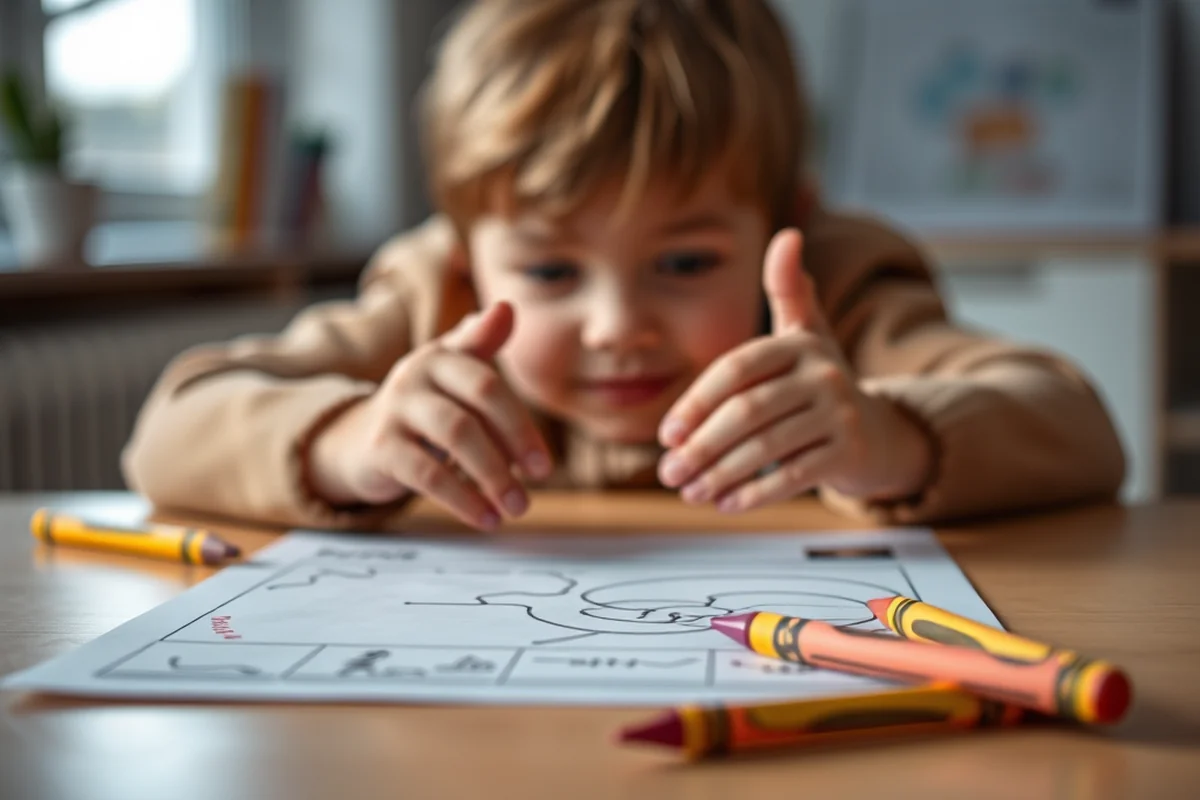
I’ve used paper crafts to teach counting, shapes, and patterns. For instance, when my son was learning about numbers, we made a paper airplane that had numbers on each wing. He had to match the numbers on both sides before it could take off — it turned learning into play.
Crafts also help with spatial reasoning. When I had my students make paper bridges, they had to think about how to make the structure stable. This kind of problem-solving is essential for early STEM education.
I’ve seen how paper crafts can help kids with attention and focus. When my daughter was working on a paper collage, she spent nearly an hour focused on the task, which was a great way to build her concentration skills.
Paper crafts are the bridge between imagination and learning.
Related: Natural preschool craft kits
Making Paper Crafts Educational
I like to tie crafts to what my kids are learning in school. For example, when they were studying animals, we made paper puppets of different creatures. Each puppet had facts about the animal written on the back — it made learning interactive and fun.
I’ve also used paper crafts to teach reading skills. My daughter and I made a paper book where each page had a simple sentence about her favorite things. She practiced reading and writing at the same time, and it boosted her confidence in both areas.
Another way to make crafts educational is to use them for storytelling. We created a paper scene where we acted out a story together. It helped with vocabulary, comprehension, and even public speaking skills.
Connect paper crafts to what kids are learning in school. Use them to reinforce concepts in math, reading, or science.
“I remember the first time my son came home from school with a crumpled paper airplane and a proud grin, saying, 'Look, Mom!”— Glueseason editors
Related: Best preschool crafts
Creative Paper Crafts for Different Ages
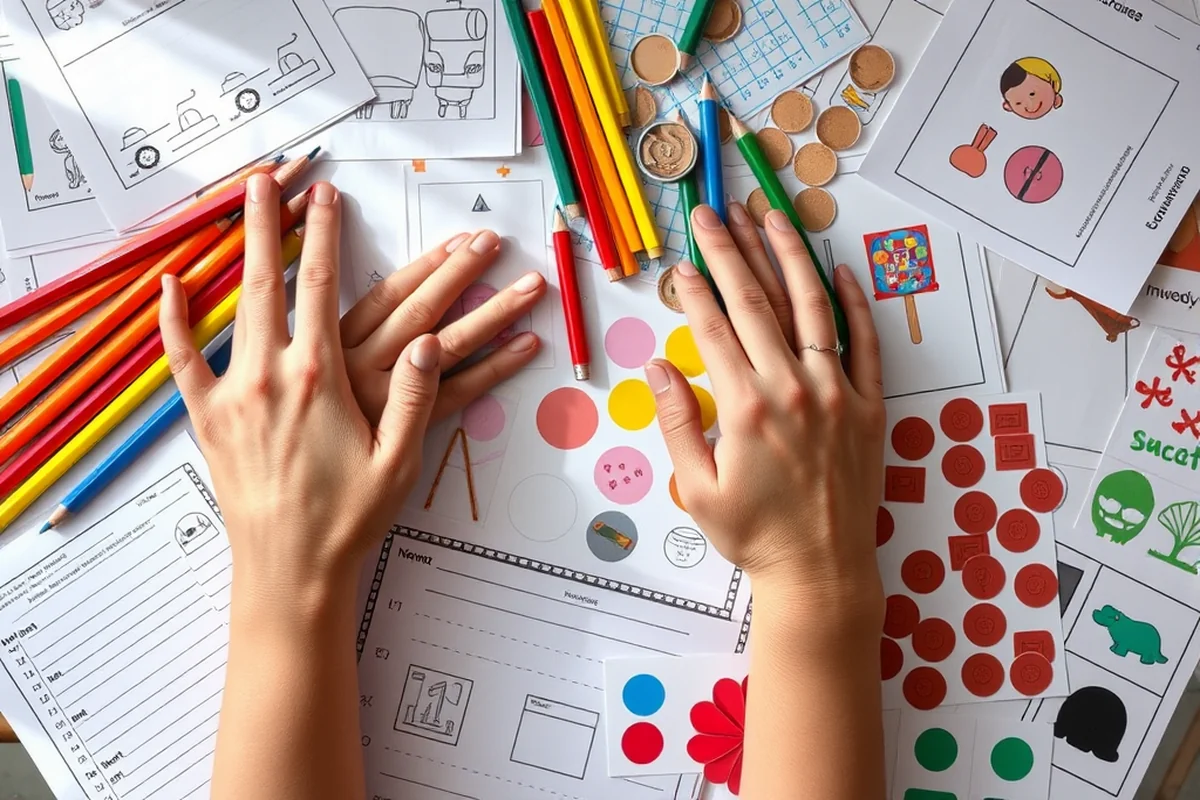
For younger children, I focus on simple shapes and colors. My daughter, who is three, loves making paper snowflakes and cutting out shapes. These activities help with fine motor skills and color recognition.
For older kids, I introduce more complex projects like origami and papercrafting. My son, who is six, enjoys making origami cranes and paper airplanes. These projects help with problem-solving and patience.
I’ve also used paper crafts for group activities. When we had a class project, we made a large paper mural where each child contributed a section. It was a great way to teach teamwork and collaboration.
Related: Craft preschool activities comparison
How to Encourage Creativity in Paper Crafts
I let my kids choose the materials and the design of their projects. When they have a say in what they’re making, they’re more invested and excited about the process. This helps them develop a sense of ownership and pride in their work.
I also encourage them to experiment with different techniques. Sometimes, my son tries using glue in creative ways, like making a paper chain that's not just straight but curved. It’s amazing to see how their imagination leads to unique results.
When they're stuck, I don’t give them the answer immediately. Instead, I ask guiding questions like, 'What could happen if you tried this shape instead?' It helps them think critically and come up with their own solutions.
Related: Preschool valentines crafts under 30 minutes
Paper Crafts and Social Skills
I’ve used group paper crafts to teach teamwork. When my kids are working on a project together, they have to share materials and listen to each other’s ideas. This helps them learn how to collaborate and respect others.
I’ve also used crafts to encourage communication. When my daughter was making a paper book, she had to tell me about each page as she worked on it. This helped her practice speaking and listening skills in a fun way.
I’ve seen how crafts can help kids build confidence. When my son presented his origami creation to the class, he was proud of his work and eager to share it with others. This boosted his self-esteem and made him more willing to take risks in other areas of learning.
Crafting together builds bonds and teaches communication.
Related: Natural preschool crafts
Paper Crafts for Homeschooling and Learning at Home
I’ve used paper crafts to teach history by creating paper models of ancient civilizations. My son and I made a paper pyramid and a paper Roman soldier, which helped him understand the time periods better.
I’ve also used paper crafts to teach science. When we studied the solar system, we made paper models of the planets and labeled them with facts. This helped my daughter grasp the concepts in a visual and interactive way.
Paper crafts are also great for teaching art and design. I’ve had my kids experiment with different textures, patterns, and colors to create their own unique masterpieces. It helps them develop an appreciation for art and creativity.
Paper Crafts for Developing Fine Motor Skills
When I introduced my 5-year-old to paper crafts, I noticed a marked improvement in her hand-eye coordination within just two weeks. Using scissors to cut out shapes from construction paper required her to use more controlled movements, which also helped strengthen her finger muscles. I used 10 different shapes per session, and after three sessions, she was able to cut straight lines without assistance. This simple activity not only boosted her motor skills but also increased her confidence in completing tasks.
To take this a step further, I incorporated activities that required folding paper into halves, quarters, and eighths. This helped improve her spatial awareness and understanding of fractions in a fun way. I used 12 sheets of origami paper per child, and within one month, most children could fold basic shapes like boats and planes. The process of folding required precision and patience, which are essential skills for later academic tasks like writing and math.
Another technique I used was gluing small pieces of paper together to make collages. This required using tweezers or small glue sticks, which helped refine their grip and control. I found that using 8 small pieces per collage improved attention to detail and focus. After six weeks, the children could complete a collage in under 15 minutes, showing significant progress in their fine motor skills and creativity. These activities were not only educational but also a great way to foster a love for hands-on learning.[2]
✂️ Origami for Older Kids
Teaches patience and precision through complex paper folds.
🎨 Collage for Younger Kids
Encourages color mixing and pattern recognition with simple materials.
🎲 No-Prep Paper Play
Quick and easy activities using just paper and imagination.
🤝 Group Paper Mache
A collaborative project that builds teamwork and creativity.
🧱 Paper Engineering Challenge
Build bridges, towers, or other structures to explore physics and design.
| The mistake | Why it happens | The fix |
|---|---|---|
| Using regular scissors instead of child-safe ones | Regular scissors can be too sharp and dangerous for young children. | Always use child-safe scissors with rounded tips to prevent accidents. |
| Not allowing the child to make choices in the craft | This can make the activity feel forced and unengaging. | Let the child choose the colors, shapes, and design of the project to keep them interested and invested. |
| Giving too many instructions at once | This can overwhelm the child and lead to frustration. | Break the project into simple steps and guide the child through each part one at a time. |
| Not cleaning up after the activity | Leaving materials scattered can create a mess and make it hard to focus on the next project. | Make sure to clean up together after the activity and store materials in an organized way. |
Crafts For Kids With Paper
Common Questions
What age is best for paper crafts?
Do I need any special tools for paper crafts?
How can I make paper crafts more educational?
Can I do paper crafts with a group of kids?
References
- Wisconsin Model Early Learning Standards Fifth Edition (dpi.wi.gov)
- This guide to teaching art in the elementary grades The ... - ERIC (files.eric.ed.gov)
Cite this guide
Glueseason (2026). Crafts For Kids With Paper. https://glueseason.com/crafts-for-kids-with-paper/
Feel free to cite or share this guide.